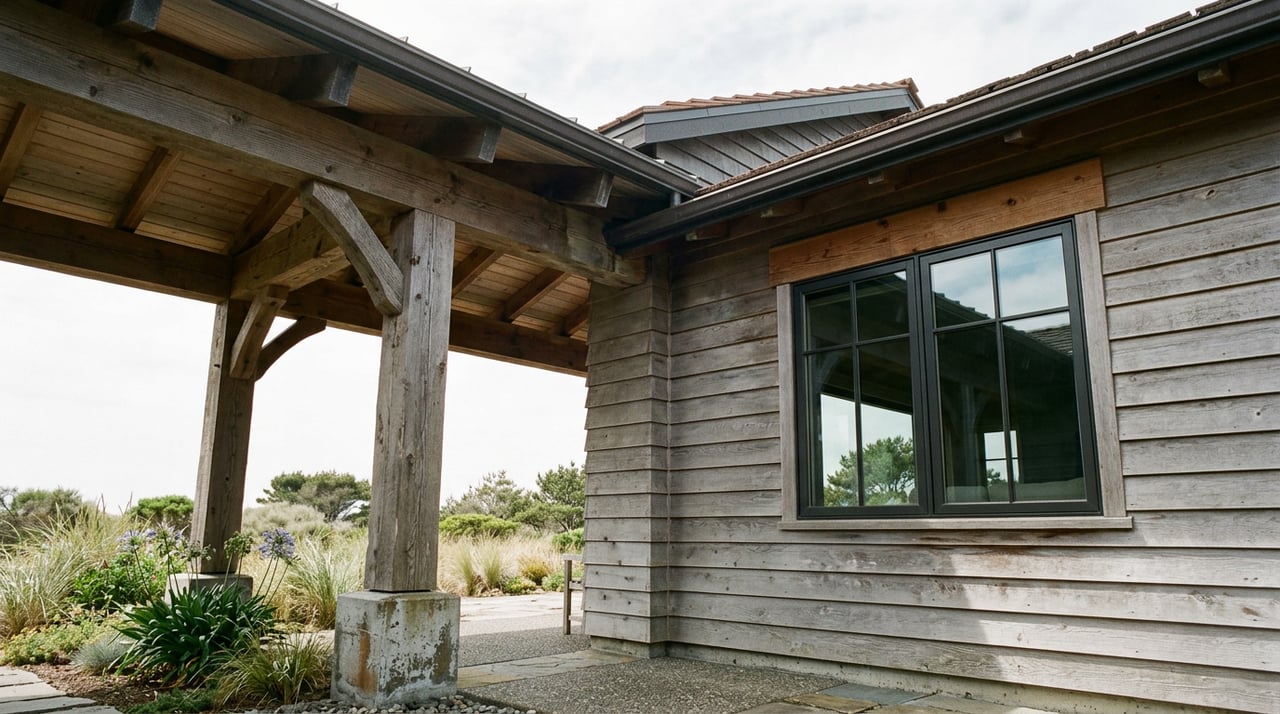
What Stuart's National Register Historic Districts Change
September 3, 2026
September 3, 2026
Say you are eyeing a 1920s bungalow a few blocks off Flagler Avenue, or a cottage in the blocks east of downtown that has been in the same family for three generations. You have already heard the neighborhood just landed a historic designation, and your first thought is the one most buyers have: does this mean I now need permission to touch my own porch?
That fear is understandable and, for the vast majority of owners in Stuart's two newest historic districts, it is wrong. The real catch in this designation has nothing to do with a review board telling you no. It has to do with one word buried in federal tax code: income-producing. Get that word wrong and you will plan a renovation budget around a tax credit you were never eligible for in the first place.
On August 4, 2026, the City of Stuart announced that the East Stuart Historic District and the Downtown Stuart Historic District were officially added to the National Register of Historic Places by the National Park Service. The listing closed out a multi-year effort led by the city's Community Redevelopment Agency, one that started as a routine update to Stuart's 1998 historic properties survey and grew into a full documentation project covering both districts.
The Downtown Stuart nomination moved forward on a grant awarded to Stuart Main Street, the nonprofit behind Rock'n Riverwalk and the Sunday farmers market on Flagler Park. Commissioner Eula Clarke called it an extraordinary achievement for the city, noting that both districts reflect stories of resilience and culture that shaped Stuart's identity.
Those are two different stories, worth separating.
Downtown Stuart's listing recognizes what most visitors already sense walking past the Lyric Theatre and the strip of storefronts along the waterfront: a commercial and civic core with distinctive early twentieth century architecture that has stayed mostly intact while the city grew around it.
East Stuart's listing carries different weight. It is Martin County's oldest historically Black community, originally platted in 1913 as the Lincoln Park subdivision. Under Jim Crow-era restrictive covenants, Lincoln Park was the only part of Stuart where Black residents could legally live, own businesses, and worship until the 1960s. The district includes the Stuart Training School, the only Rosenwald Fund school built in Martin County, part of a nationwide program financed by Sears Roebuck's Julius Rosenwald and modeled on ideas from Booker T. Washington to build schools for Black students between 1913 and 1932.
That history is exactly what the National Register exists to document. It is also exactly why the practical mechanics of the listing matter to anyone weighing a purchase in either district.
Here is what a lot of buyers assume the moment they hear "historic district": some commission now has veto power over their paint color, their windows, their addition.
For a privately owned home that isn't using federal money or federal tax incentives, that assumption is simply false. Florida's Division of Historical Resources is direct about this: National Register listing does not restrict a property owner's private property rights. Owners can remodel, renovate, sell, or even demolish their property with no federal restriction, unless significant changes are made using federal grant funds or federally sponsored tax benefits. Design review requirements come from a separate mechanism, typically a local historic preservation ordinance with its own commission, and Stuart's two new districts being added to the National Register does not automatically create one.
If you are buying in either district purely to live in the house and pay for your own updates out of pocket, the National Register listing by itself changes almost nothing about what you're allowed to do to your property.
Where this gets interesting, and where a lot of renovation-minded buyers get tripped up, is the Federal Historic Rehabilitation Tax Credit. It is one of the more generous tools in the historic preservation toolkit.
The National Park Service explains the eligibility rule that trips people up: the credit is only available to properties rehabilitated for income-producing purposes. That means commercial buildings, rental residential property, or a portion of a personal residence used as a business or rental unit. It does not apply to a private, owner-occupied home. A family buying that East Stuart cottage to live in full time gets no direct benefit from this credit. An investor buying the same cottage to hold as a long-term rental, or a buyer converting part of a Downtown Stuart building into a storefront with an apartment above, is a completely different calculation.
This is precisely the distinction that matters for Lorie's investor and renovation-minded clients weighing a fixer-upper against a move-in-ready listing a few blocks outside either district boundary. The tax math only works one way.
Florida has a second tool that predates the federal credit's relevance here. The Florida Department of State explains that in 1992, the state legislature amended Florida's constitution to let counties and cities offer an ad valorem tax exemption for improvements to historic properties. Where adopted, when a qualifying rehabilitation increases a property's assessed value, the increase can be exempted from local property taxes for up to 10 years.
The word that matters here is "where adopted." This is a local option, not something that switches on automatically because a district joins the National Register. Whether the City of Stuart or Martin County has passed the implementing ordinance for either of these two new districts is a question worth asking the city's Community Redevelopment Agency directly before you build a renovation budget around it, not something to assume from the state law existing.
One more layer worth knowing before you get attached to a specific address: National Register historic districts distinguish between "contributing" and "non-contributing" structures. Districts are tied to a period of significance, and a building has to retain enough historic material and character from that period to count as contributing. A 1990s infill house sitting inside the district boundary, or an older home that has been substantially altered, may not qualify for any of the credit or exemption programs even though it sits on the map inside the historic district.
Before writing an offer on a property in either district, it is worth asking a few direct questions:
None of these questions will scare off a good deal. They will keep you from budgeting around a benefit that doesn't apply to your specific plans.
Does this affect my homeowners insurance premium? The National Register listing itself is not an insurance rating factor. Insurers price based on the physical characteristics of the structure, such as roof age and construction type, not its historic status.
Do I need city permission to repaint my house or replace windows? Not because of the National Register listing alone. That kind of design review requirement comes from a local historic preservation ordinance with its own commission, which is a separate legal mechanism from federal listing.
Is every house in East Stuart or Downtown Stuart automatically part of the historic district? Only properties within the surveyed and nominated boundary are included, and within that boundary, only some structures are classified as contributing based on age, integrity, and connection to the district's period of significance.
Stuart's two new historic districts are a genuine milestone for the city, and East Stuart's designation in particular gives long overdue federal recognition to a community whose history predates most of what gets marketed as "old Florida charm" in this county. For anyone actually buying or selling here, the designation is worth understanding on its own terms: mostly incentive, narrowly targeted, and dependent on decisions the city hasn't necessarily made yet.
If you're weighing a renovation project in Downtown Stuart or East Stuart, or comparing that opportunity against move-in-ready inventory elsewhere on the Treasure Coast, Lorie Arena can walk through what a specific address actually qualifies for before you write the offer. Call Lorie. I answer my phone.
This article is general information, not legal, tax or financial advice. Consult a qualified professional about your situation.
Stay up to date on the latest real estate trends.

Lorie provides a hands-on, client-focused real estate experience defined by clear communication, trust, and responsive service—guiding buyers and sellers every step of the way.

Lorie Arena
2000 PGA Blvd #2100 Palm Beach Gardens FL 33408