Rocky Point Stuart FL Dock and Seawall Guide Before You Buy
August 13, 2026
August 13, 2026
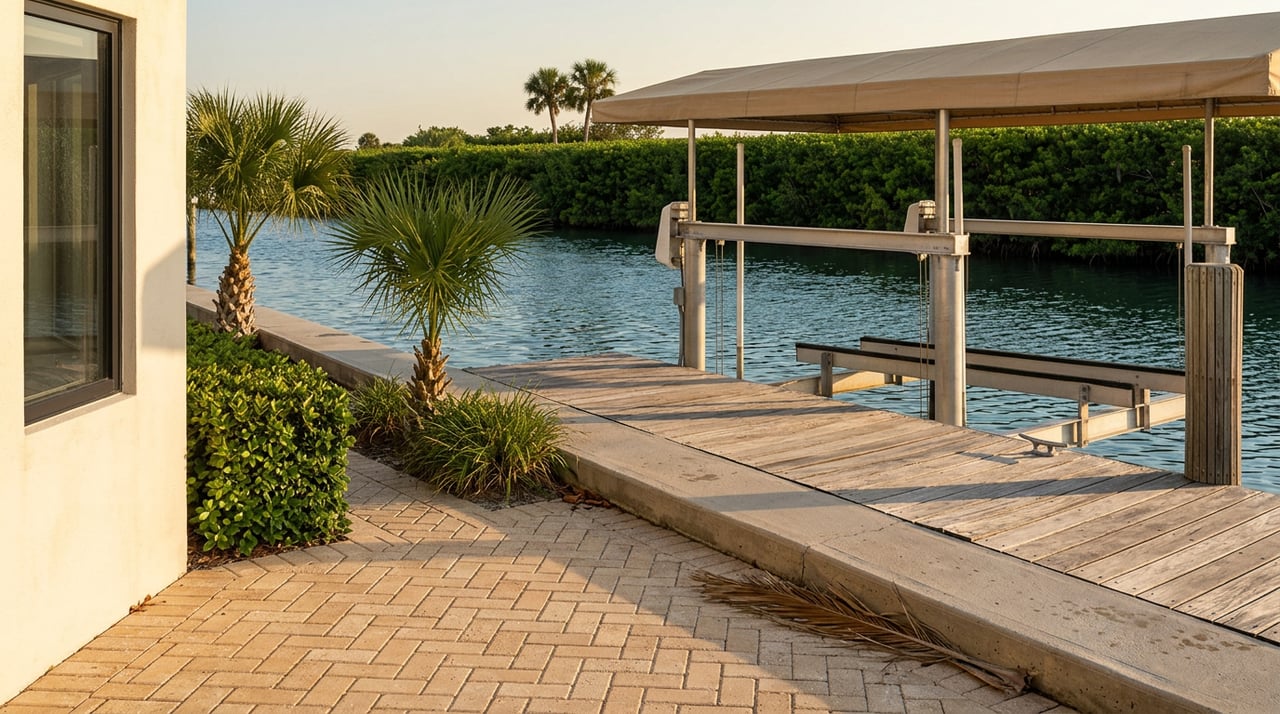
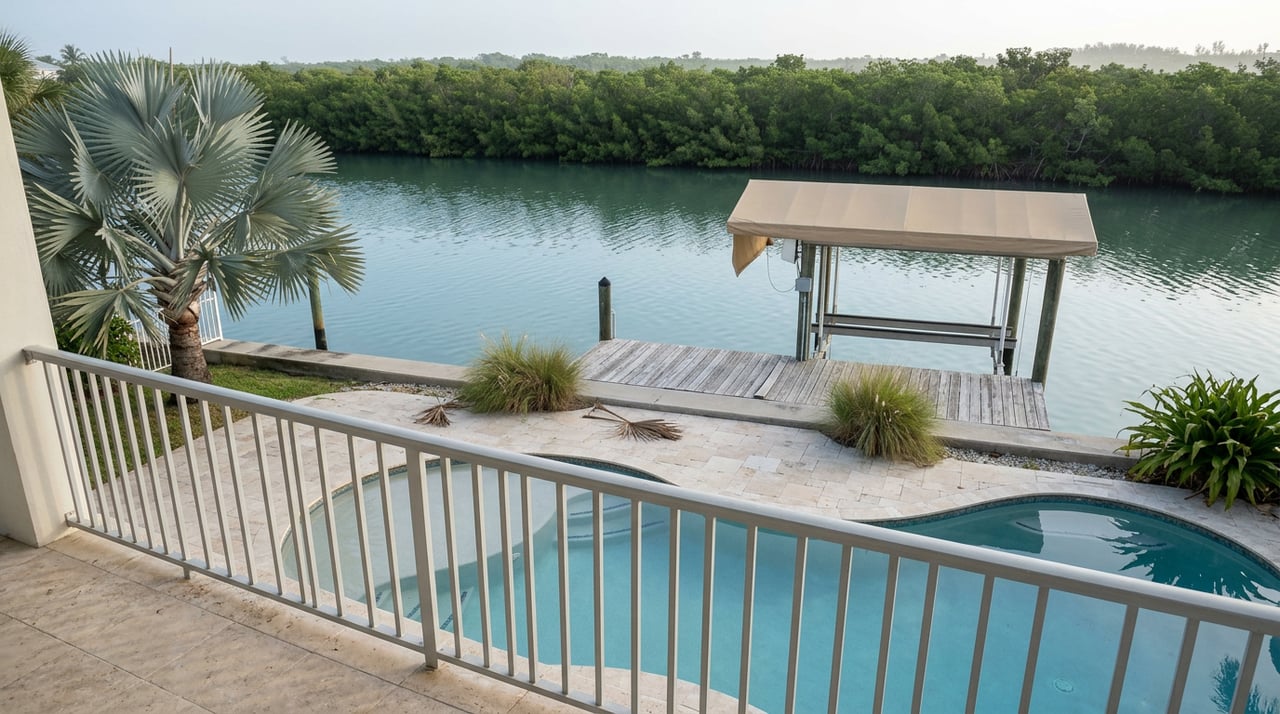
Two listings sit a few streets apart on the Rocky Point peninsula. Both say "waterfront." Both show a photo of blue water past the lanai. One comes with a private, deeded dock and a lift rated for a clean run out to the St. Lucie Inlet. The other comes with a canal view and nothing you're legally entitled to tie a boat to. The listing photos look almost identical. Only the deed tells you which one you're buying.
That gap matters more this year than it usually does. As of July 2026, there were only two active listings in the Rocky Point community, ranging from $789,000 to $3.3 million. When inventory sits that thin, you don't get to write an offer, discover the dock situation during your inspection period, and quietly move on to a comparable house down the street. Most of the time, there isn't one on the market at the same time.
Most of Rocky Point is non-HOA. Homes here typically come with individually deeded docks, meaning the water access lives in your title, not in a membership roster. You own it the same way you own your driveway.
Rocky Point Estates works differently. It's one of the only HOA pockets on the peninsula, built around a shared 29-slip marina sized for boats up to 30 feet, plus a park with a boat ramp and picnic grounds. But that marina isn't a neighborhood amenity in the usual sense. Slips can only be owned or leased by members in good standing, and members can sell or trade docks among themselves within the community. If you're comparing a non-HOA canal home to a home inside Rocky Point Estates, you're not comparing two flavors of the same product. You're comparing a deeded asset to a club membership.
| What you're buying | Who controls access | What to verify before offer |
|---|---|---|
| Private deeded dock, non-HOA | You, outright | Permit history for dock, lift, and seawall |
| Rocky Point Estates marina slip | HOA membership status | Written confirmation of eligibility from HOA leadership |
| Waterfront lot, no dock | County and state permitting | Whether a dock qualifies for a general permit at all |
Here's the detail that trips people up. Not every home on the streets originally eligible for Rocky Point Estates membership actually joined, and joining later isn't automatic. If a previous owner let membership lapse, or never joined at all, that status doesn't reset just because the house changed hands. A buyer has to contact HOA leadership directly to find out whether rejoining is even possible before assuming the marina comes with the address.
A house inside the Rocky Point Estates boundary and a house with an active marina slip are not the same purchase. The second one requires paperwork the listing sheet won't show you.
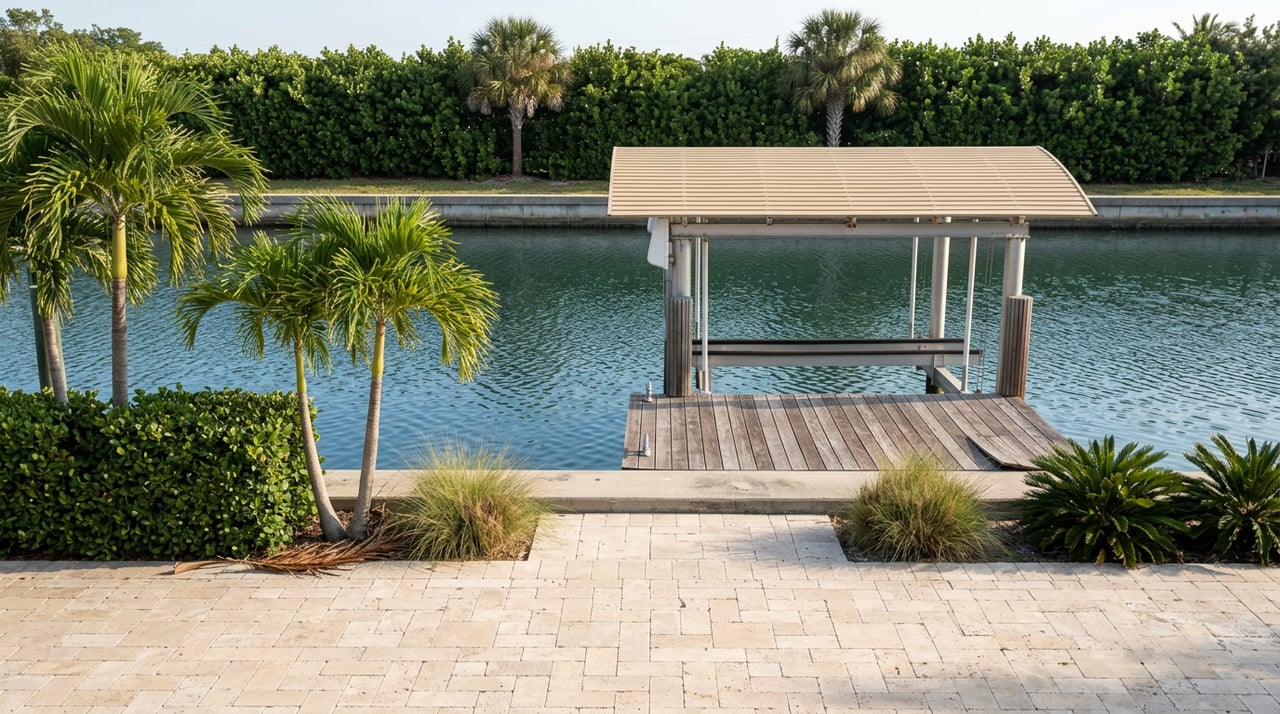
A dock that looks solid from the seawall can still be a liability if the paperwork behind it doesn't hold up. Shoreline structures in Florida tend to get treated as one connected system rather than separate parts. If a seawall, dock, or lift was built or repaired without a permit, and a future owner tries to fix or modify any piece of it, the county or state can require the entire shoreline to be brought up to current code, not just the piece being touched. That's a cost that shows up after closing, when it's the new owner's problem to solve.
There's a second wrinkle specific to this stretch of the Treasure Coast. Some shoreline segments in Martin County restrict or discourage new vertical seawalls, particularly on raw, unimproved shoreline. Buyers who assume they can simply add or extend a seawall later sometimes find that option isn't on the table at all. Agents who close waterfront deals across this Martin County and Palm Beach County corridor also report buyers who assumed they owned the submerged land under a dock, only to learn during a title search that someone else did.
None of this shows up in a walkthrough. It shows up in county permit records, which is exactly where the diligence needs to happen.
With only two active listings on the peninsula in July 2026, and at least one 2026 Rocky Point sale closing in about a week with a nearby home following at full price within a month, there isn't much runway to discover a permitting gap during your inspection period and expect a seller to negotiate a large credit. In a market with more inventory, that leverage exists. In a market this tight, the buyer who already knows what they're looking at moves faster and negotiates from a stronger position than the buyer who's still figuring out what kind of waterfront they actually found.
Does an older seawall that's been there for decades still need a permit on file? Yes. Age doesn't exempt a structure from having documented permit history, and older seawalls built before current rules took effect can still require paperwork when they're repaired or replaced.
If I buy a non-HOA home in Rocky Point without a dock now, can I add one later? Sometimes, but it depends on your specific stretch of shoreline, water depth, and whether the project qualifies for a simplified general permit or the longer individual review process. That's worth confirming before you write an offer assuming you'll add a dock down the road.
Is the Rocky Point Estates marina the only shared water access on the peninsula? Yes. It's one of the only HOA-run shared marinas in Rocky Point. Most of the rest of the peninsula relies on individually deeded private docks rather than a communal facility.
If you're comparing Rocky Point listings and can't tell which kind of waterfront you're actually looking at, that's the conversation to have before you write an offer, not after. Lorie Arena works this stretch of the Treasure Coast regularly and can help you read a dock deed, a permit history, or an HOA marina agreement before it becomes a closing-day surprise. Call Lorie, I answer my phone.
Stay up to date on the latest real estate trends.

Lorie provides a hands-on, client-focused real estate experience defined by clear communication, trust, and responsive service—guiding buyers and sellers every step of the way.

Lorie Arena
2000 PGA Blvd #2100 Palm Beach Gardens FL 33408