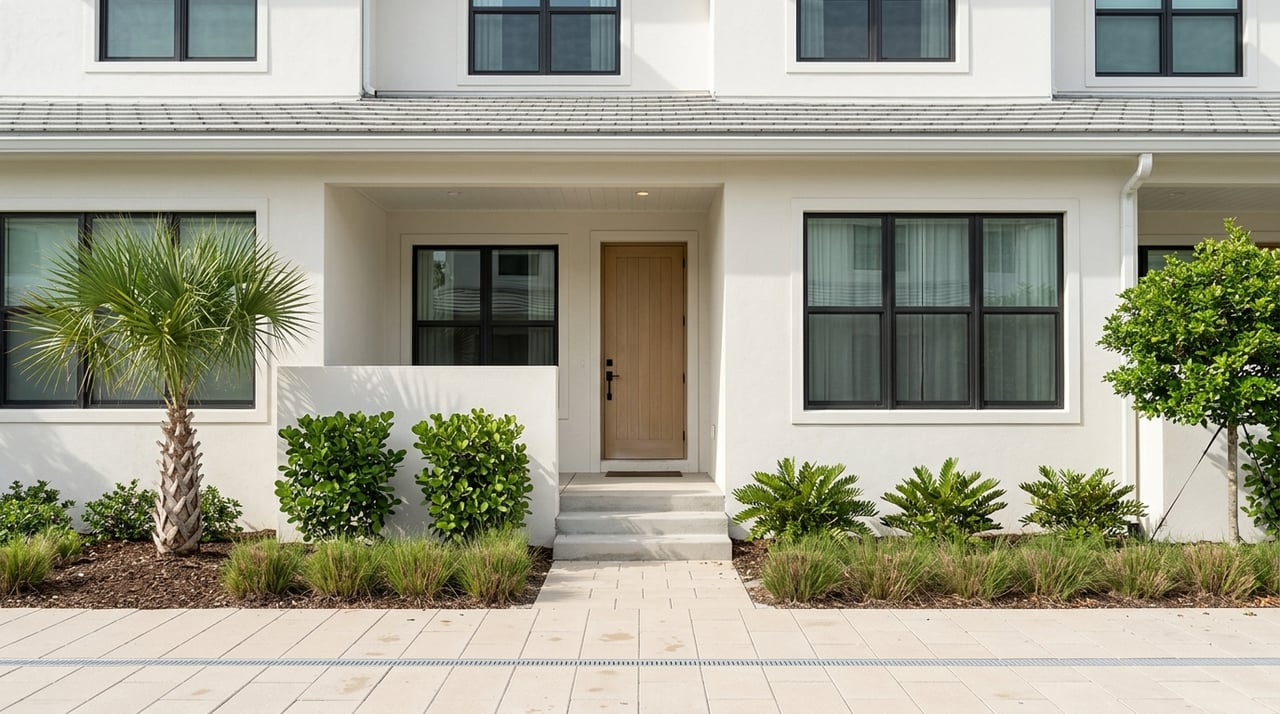
Condo Or Townhome In Jupiter? How To Decide
June 18, 2026
June 18, 2026
Thinking about buying in Jupiter but stuck between a condo and a townhome? You are not alone. In a coastal market where boating, parks, and easy lock-and-leave living matter, the right choice often comes down to how you want to live day to day, not just what looks best online. This guide will help you compare the two, understand the Florida rules that matter, and ask smarter questions before you buy. Let’s dive in.
Jupiter has a lifestyle that makes this decision more important than it might be in other markets. The town has more than 25 parks, a Riverwalk that connects waterfront areas and gathering spots, and the Jupiter Inlet area is a well-known boating hub. Public boat ramps at Burt Reynolds Park add to that active, outdoor appeal.
Because of that setting, many buyers want a home that matches how often they will actually be in town. If you plan to travel often, own seasonally, or spend more time on the water than on home upkeep, a lower-maintenance setup may feel like a better fit. If you want more room and a layout that feels closer to a house, a townhome may be worth a closer look.
At a high level, condos and townhomes can offer very different ownership experiences. A condo often means more shared responsibility through the association, while a townhome may give you a more independent feel. The exact details, though, depend on the community documents.
In Florida, condos are governed by Chapter 718. Homeowners' associations, which often govern townhome communities, are governed by Chapter 720. That legal difference affects maintenance, fees, reserves, disclosures, and what you should review before you sign a contract.
Under Florida law, a condo association is responsible for maintaining the common elements, except where the declaration assigns certain limited common elements to a unit owner. The association must also handle maintenance, repair, and replacement for the condominium property it is responsible for under the declaration.
In practical terms, that often means more of the building exterior and shared systems are handled through the association. Your monthly dues may cover a broader set of items, but you also have less direct control over when and how some work gets done.
Townhomes in Jupiter are often part of an HOA, and that setup can vary a lot from one community to the next. Florida law requires a disclosure summary before contract execution, and that disclosure makes clear that buyers will pay assessments and may face special assessments.
Unlike condos, HOA reserve accounts are optional unless approved by a majority of the total voting interests. Once approved, they must be included in future budgets. That means a townhome community's documents matter just as much as the property style itself when you are trying to understand who maintains what.
For many buyers, this is the biggest deciding factor. If you want the most maintenance-light option, condos often come out ahead. They usually pool more of the exterior and building-system responsibilities into the association structure.
Townhomes often feel more house-like because owners may have a larger share of responsibility for the unit and exterior. That said, you should never assume. In Jupiter, one townhome community may cover roof and exterior maintenance, while another may leave more of that responsibility with the owner.
Before you get too attached to any property, ask the association or seller for clear answers on:
These answers should come from the declaration, bylaws, and maintenance chart for that specific community. The label alone does not tell the full story.
Monthly dues are only part of the cost picture. In Florida, especially with condos, reserve funding and inspection requirements can have a major impact on what you pay now and later.
For certain residential condominiums with buildings three habitable stories or higher, Florida law requires a structural integrity reserve study at least every 10 years after creation. Older associations controlled by unit owners must complete the study by December 31, 2025, unless it is performed together with a milestone inspection by the 2026 deadline.
That study covers major items such as:
A condo's monthly dues may reflect more than amenities like a pool or fitness room. They can also reflect required reserve funding, repair planning, and the financial reality of maintaining a shared building.
The Florida Department of Business and Professional Regulation explains that a milestone inspection is a structural inspection used to determine whether substantial structural deterioration exists. That is different from the structural integrity reserve study, which focuses on reserve planning. If reserves are not adequate, an association may need special assessments or financing.
Palm Beach County says that, for unincorporated county buildings, condominium and cooperative structures three stories or taller within three miles of the coastline follow a 25-year milestone schedule. Buildings farther inland follow a 30-year schedule.
Because Jupiter properties may fall under different local jurisdictions, you should confirm which building official oversees the specific community. You should also ask whether the building is on a 25-year or 30-year path.
The best choice is often the one that matches how you plan to use the home. In Jupiter, that matters because many buyers are choosing not just a property, but a lifestyle built around the water, parks, and outdoor recreation.
A condo may make sense if you want:
This often lines up well with snowbirds, frequent travelers, and downsizers who want easy access to Jupiter's parks, Riverwalk, and boating areas without taking on the upkeep of a larger exterior.
A townhome may be the better fit if you want:
That can appeal to first-time buyers, local movers, and buyers who want a managed community but still want a more traditional residential feel.
In Florida, paperwork matters. It tells you more than the listing photos ever will.
For condos, sellers must provide key documents in resale transactions, including the current declaration, articles, bylaws, rules, recent financials, and, if applicable, the milestone inspection summary and most recent structural integrity reserve study. Current contract language must also address whether a required inspection or study has been completed.
For HOA-governed townhomes, Chapter 720 requires a disclosure summary before contract execution. If that disclosure was not delivered on time, the contract may be voidable.
Ask for these items early:
Reviewing these up front can help you spot future costs, rule limitations, and maintenance issues before you get deep into negotiations.
If you are touring both condos and townhomes in Jupiter, keep your decision simple. Create a comparison sheet for each property so you are measuring more than just price.
Focus on:
This kind of side-by-side view makes it easier to see which home actually fits your goals. It can also keep you from being swayed by finishes alone.
There is no universal winner between a condo and a townhome in Jupiter. A condo often works best if you want simplicity, easier upkeep, and a strong lock-and-leave lifestyle. A townhome often works best if you want more space, a more independent feel, and a balance between convenience and control.
The key is to match the property type to how often you will be in Jupiter, how much maintenance you want to manage, and how comfortable you are with association oversight. When you understand the documents, the fees, and the local lifestyle, the decision gets much clearer.
If you want help comparing Jupiter condos and townhomes with a local, practical lens, reach out to Lorie Arena. She brings hands-on guidance, clear answers, and the kind of responsiveness that helps you move forward with confidence.
Stay up to date on the latest real estate trends.

#jupiter

Real Estate
Stuart, FL
Lorie provides a hands-on, client-focused real estate experience defined by clear communication, trust, and responsive service—guiding buyers and sellers every step of the way.

Lorie Arena
2000 PGA Blvd #2100 Palm Beach Gardens FL 33408